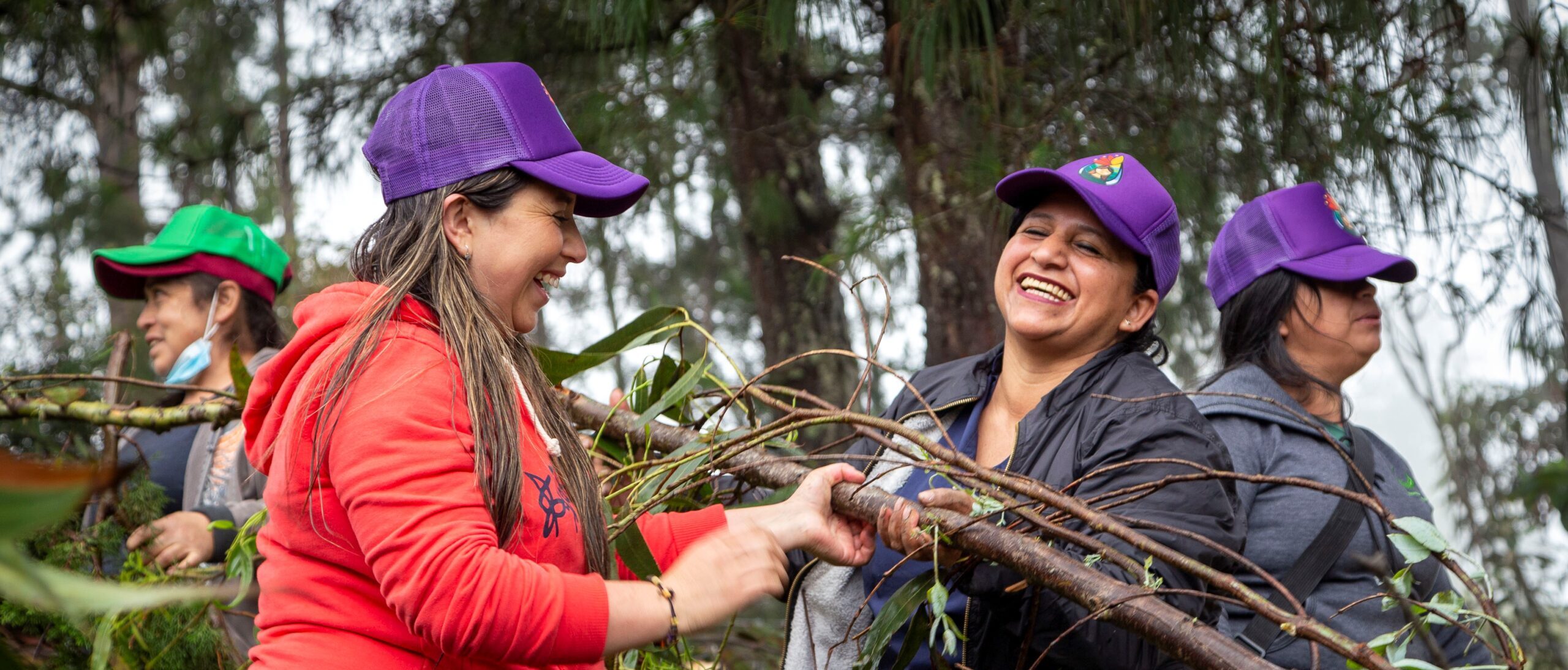
The United Nations Women’s Peace and Humanitarian Fund (WPHF) is channeling funding to local women’s civil society organizations to enhance their active participation and leadership in climate security efforts on the front lines.
Learn MoreClimate change is a global crisis with profoundly unequal impacts. According to the Intergovernmental Panel on Climate Change (IPCC), more than 3.3 billion people are currently classified as highly vulnerable to its effects, with women and girls disproportionately affected, particularly in fragile and conflict-affected contexts. As environmental systems are disrupted, climate change acts as a driver of insecurity, contributing to conflict, political instability, displacement, poverty, and hunger while increasing exposure to gender-based violence and loss of livelihoods. Women environmental and human rights defenders face additional threats, often targeted for their advocacy and leadership in protecting land and resources.
In a context of increasing frequency and severity of climate disasters, women and girls have fewer resources and opportunities to prevent harm, adapt to changing conditions, or recover from climate shocks. Yet women across the world are leading transformative responses. They are restoring ecosystems, promoting peace, protecting resources, and driving peacebuilding efforts that address both climate stressors and social inequalities. Their leadership and local knowledge are essential to achieving sustainable, inclusive, and peaceful outcomes.
Supporting Women At the Forefront of Climate Action
Women’s equal and meaningful participation in climate-related decision-making is essential to promoting peace, stability, and resilience. Yet women-led environmental action remains critically underfunded, receiving only 0.2 per cent of global philanthropic giving.
Increased and sustained investment in women’s organisations is key to building climate resilience and preventing climate-related conflict and injustice.
As part of its 2023–2025 Strategic Plan, WPHF launched its Women and Climate Security Initiative, focusing on the link between climate change and the Women, Peace and Security agenda. This strategic priority aims to support local women leaders to address the gender-climate-security nexus, accelerating their work in climate security across the WPHF portfolio and promoting strategic initiatives in partnership with Member States, civil society organizations and the private sector.
Impact by the Numbers
Climate Security Calls for Proposals launched in the Pacific, Nigeria, Colombia, and Bangladesh
civil society organizations supported
mobilized
When women climate activists and peacebuilders are adequately financed, their impact is exponential.
WPHF is providing flexible programmatic and institutional financing to advance the leadership of local women’s organizations across the following thematic areas:
- Prevention of climate-related conflicts and injustice: Women participate in and inform decision-making processes and responses related to the prevention of climate-related conflicts and injustice (aligned with WPHF impact area 2)
- Humanitarian response to climate-related crises/disasters: Climate-related humanitarian/crisis response planning, frameworks and programming are gender inclusive and responsive (aligned with WPHF impact area 3)
- Economic and political participation on climate security: Women lead and participate in socio-economic recovery and political decision-making to reduce climate-related conflicts and injustice (aligned with WPHF impact area 6)
Eligible countries
- Eligible WPHF Countries
- Reserve List Countries
- Eligible WPHF Countries
- Reserve List Countries
Project Highlights
COLOMBIA
In Colombia, WPHF is supporting the Corporación de Investigación y Acción Social y Económica (CIASE) on a project to strengthen the leadership and participation of Indigenous women in environmental governance, positioning them as key actors in advancing climate justice and preventing conflicts related to environmental insecurity. Focused in Nariño, the project seeks to improve water security and reduce conflict over natural resources by supporting women and youth leaders involved in reforestation and environmental stewardship.
What kind of project activities are we funding?
- Creating climate governance committees with at least 50% women in leadership, alongside dialogue spaces and exchange forums that promote peaceful natural resource management and climate adaptation through traditional and innovative practices
- Launching awareness campaigns on the impact of climate change, the role of women as environmental defenders, and the links between environmental degradation and violence
- Supporting women to co-develop political advocacy strategies and land use plans centered on water governance and biodiversity
- Strengthening reforestationg efforts led by women and youth, contributing to climate mitigation and reducing environmental pressures that can fuel local conflict
NIGERIA
In Nigeria, WPHF is supporting the Center for Women’s Studies and Intervention (CWSI) on a project to support women-led civil society organizations, policymakers, and community leaders to lead climate security initiatives and address conflict and injustice rooted in natural resource management.
What kind of project activities are we funding?
- Training community peace advocates to lead climate security efforts and reduce resource-based conflicts
- Familiarizing women and girls with climate-smart agricultural techniques like rainwater harvesting and rotational planting
- Providing women and girls in conflict-affected areas with organic seeds for climate-resilient crops, while coaching them on planting, harvesting, and marketing these crops to address economic injustice and environmental challenges
- Establishing local climate security architecture dialogues to foster continuous exchanges on climate security, climate-smart agricultural practies, and early warning systems
VANUATU
In Vanuatu, WPHF is supporting Action Aid Vanuatu on a project that addresses climate-induced gender-based violence and insecurity while enhancing women’s leadership in preventing climate-related conflict and violence.
What kind of project activities are we funding?
- Providing safe spaces for women to organize, share learning, and respond to conflicts
- Establishing emergency shelters, community kitchens, and psychosocial referral pathways, in collaboration with local programs like the Committee Against Violence Against Women (CAVAW)
- Training women in the use of the Vanuatu Survivor-Victims Charter through a training-of-trainers model and developing community-based climate resilience and security action plans
- Improving early warning systems, providing timely climate and emergency information through bulk SMS and a phone tree network to enhance women’s resilience and safety
Key Impacts
TONGA
With WPHF support, the Tonga Community Development Trust have supported over 2,000 women and marginalized people to lead in disaster preparedness. Women now serve on village disaster Committees, and 30 resilience plans reflect gender and traditional knowledge priorities. Home gardens have strengthened food security, and national authorities recognize women’s inclusion as key to improving coordination and gender-responsive disaster planning.
UGANDA
Supported by WPHF, the National Association of Professional Environmentalists (NAPE) have established peace hubs and local peace committees, mediating over 100 land and domestic disputes. Multi-stakeholder dialogues have led to company commitments on land and gender-based violence, while radio programs have reached four million listeners. Training in organic farming and crafts is helping women strengthen food security and peace in their communities.
NIGER
Through WPHF’s Land for Women project, the Association des Jeunes pour l’Environnement et l’Éducation Civique (AJEEC) is increasing women’s participation in land governance and climate-resilient livelihoods. Digital tools like the Halassey-Bani platform have helped prevent 58 land disputes and raised women’s representation in local governance by 20%. Women leaders are now mediating resource conflicts and advancing climate-smart livelihoods, earning national and international recognition, including at COP16 in Saudi Arabia.
The WPHF Funding Initiative on Women and Climate Security has been featured at several events since its launch in December 2023. WPHF co-hosted several in-person events at COP29 in Azerbaijan, COP28 in the United Arab Emirates, the 4th International Conference on Small Island Developing States (SIDS) in Antigua and Barbuda, the Berlin Climate Security Conference, and the WPS 25th anniversary, including a meeting between the Group of Friends on Climate and Security and the Group of Friends on Women, Peace and Security, featuring WPHF partners from featuring countries (Colombia, DRC, Uganda and Fiji) as speakers. In New York, a WPHF partner from Colombia briefed members of the UN Security Council on her work as a woman human rights defender on climate security and climate justice issues during an in-person Arria-Formula meeting and a briefing of climate experts at the Slovenian Mission. Two breakfast meetings with Germany’s Secretary of State and Climate Envoy Jennifer Morgan were held in Nigeria and Fiji with three WPHF-funded partners to discuss women’s participation and leadership in climate security. WPHF also acted as a speaker at eight in-person and online events highlighting its Funding Initiative on Women and Climate Security and the importance of investing in women and girls to address climate-related conflicts and injustice. These include three side events at COP29 and COP30, an in-person donor roundtable discussion at the Third Environmental Peacebuilding Conference in The Hague, Netherlands, and a briefing of the Group of Friends on Women, Peace and Security.Advocacy
Support Our Climate Security Work Around the World
DONATE NOW
