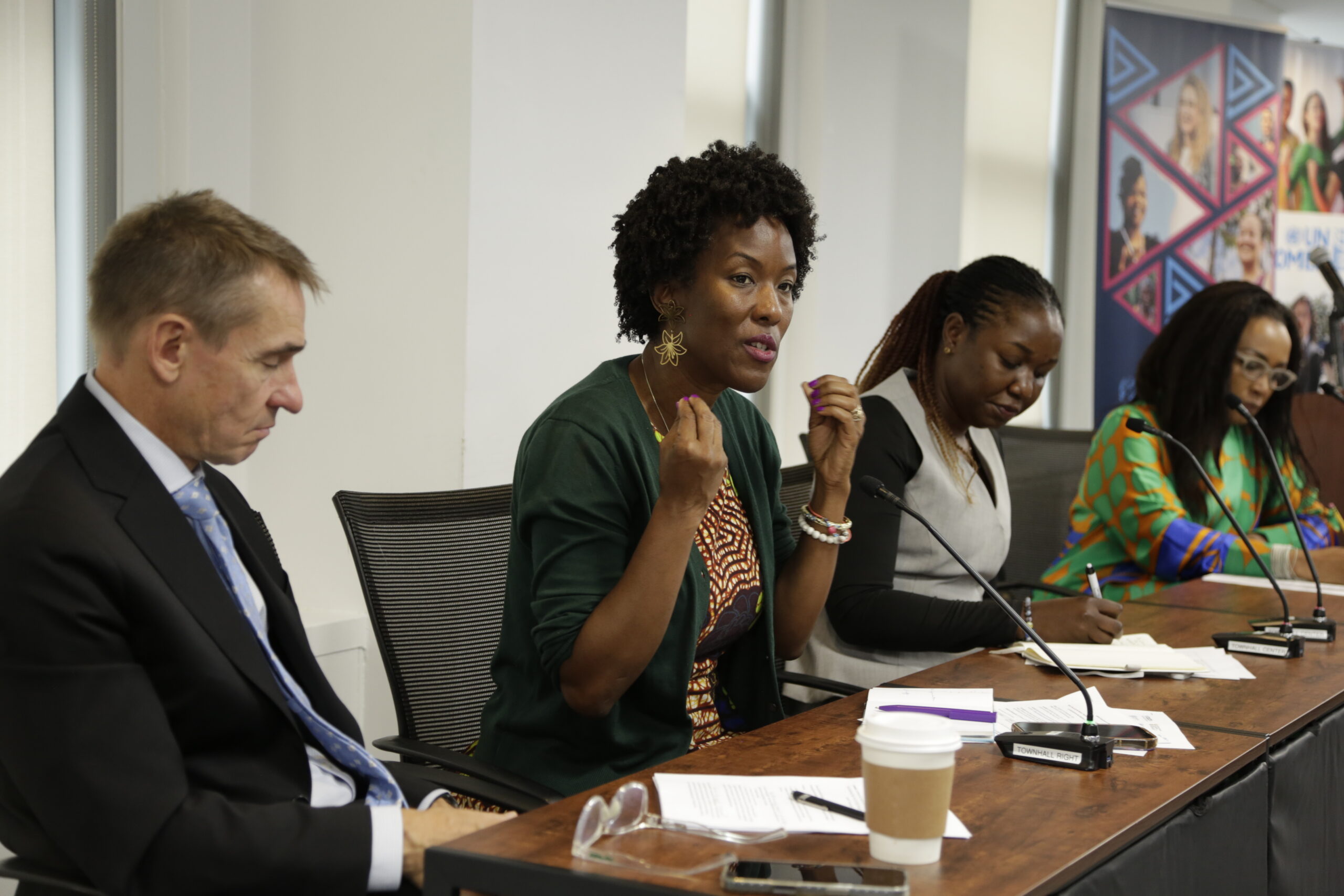
(New York, NY) In an increasingly complex landscape of interconnected crises, local women-led organizations are already delivering lifesaving assistance, protection, conflict prevention, and peacebuilding. Yet they continue to face major barriers in accessing the financing needed to sustain their work.
At the 81st Session of the UN General Assembly, the United Nations Women’s Peace and Humanitarian Fund (WPHF), together with the Government of South Africa, UN Women, the United Nations Office for the Coordination of Humanitarian Affairs (OCHA), the UN Peacebuilding Fund, and Open Society Foundations, convened a high-level dialogue entitled “Financing the Nexus: Towards More Coherent Support for Local Women-Led Organizations.” The discussion asked how international financing architecture can evolve to support coherent, gender-responsive, and locally-led responses across the humanitarian-development-peace nexus.
Speakers emphasized the need to remove barriers that prevent local women-led organizations from scaling their impact and to ensure financing reaches them directly, predictably, and flexibly. They highlighted how pooled funds and philanthropic institutions can complement one another while maintaining their comparative advantages, and how core and long-term funding can enable organizations to respond quickly to crises while sustaining peacebuilding efforts.
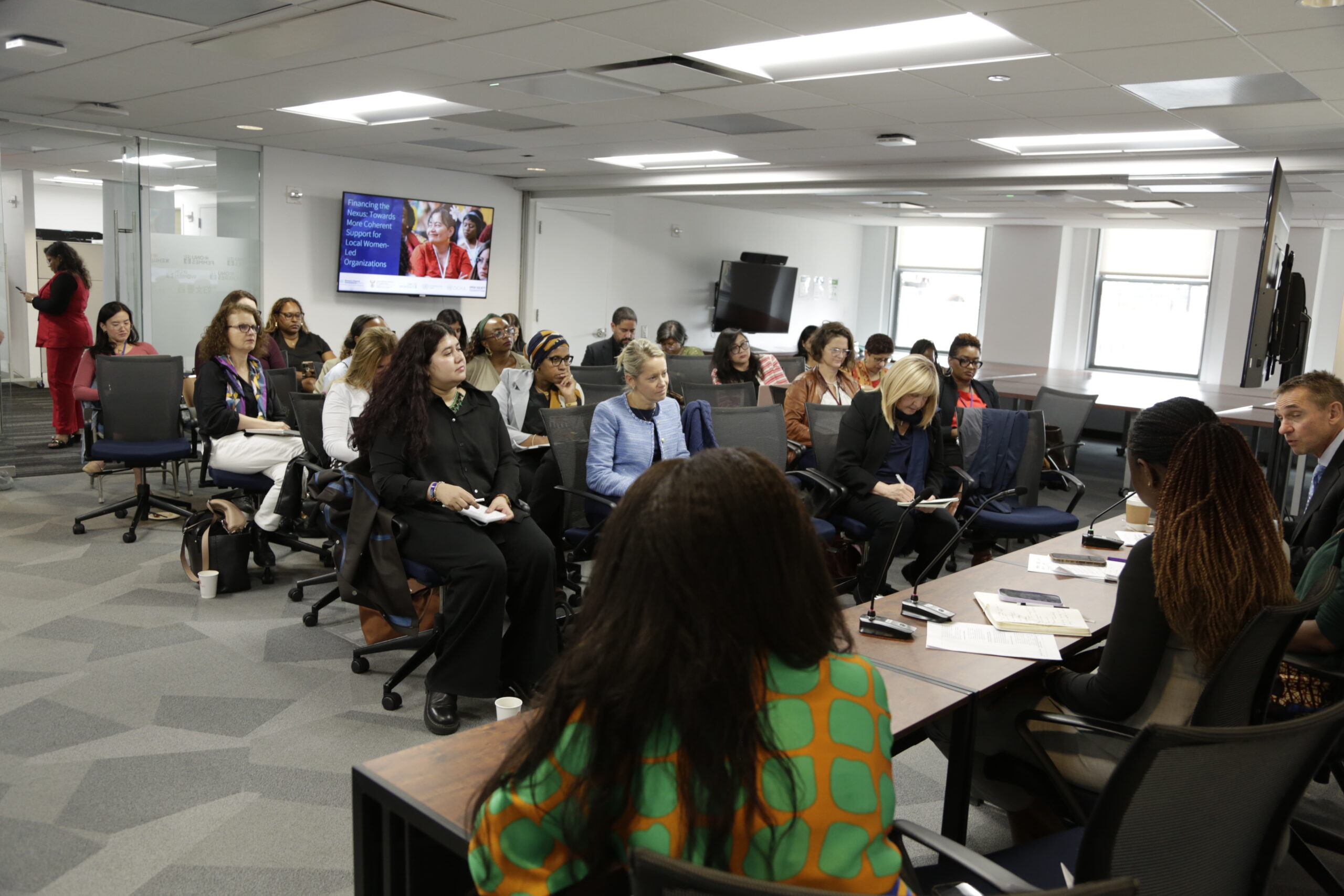
At the event, speakers called for funding mechanisms that put local women-led organizations in a stronger position to expand their work, with resources delivered directly and on terms that are reliable, adaptable and responsive to their needs. Photo: UN Women/Mazlum Guzel
Tonni Brodber, Head of the WPHF Secretariat, reminded participants of the human cost borne by women leaders on the frontline, saying: “It is difficult to do this work. They are taking time away from their family, they are taking time away from their communities and they are putting themselves and their families in the line of fire. They need their livelihoods to be supported as they do so because this work is not easy work. It is worthy, but it is not easy.”
Xiomara Acevedo, Founder and Director of Fundación Barranquilla +20 in Colombia, highlighted the burden of bureaucracy and reporting requirements that consume valuable time and energy: “When you are implementing projects, you spend a lot of time doing reporting… Every three months, you have to report, and that takes a lot of time for our leaders […] This is one issue that can really make the difference in not only providing direct access, but also flexible funding and understanding that the dynamics are very different.” Fundación Barranquilla+20 is a civil society organization that promotes climate action processes led by youth, women leaders, and communities committed to territorial transformation in Colombia and Latin America.
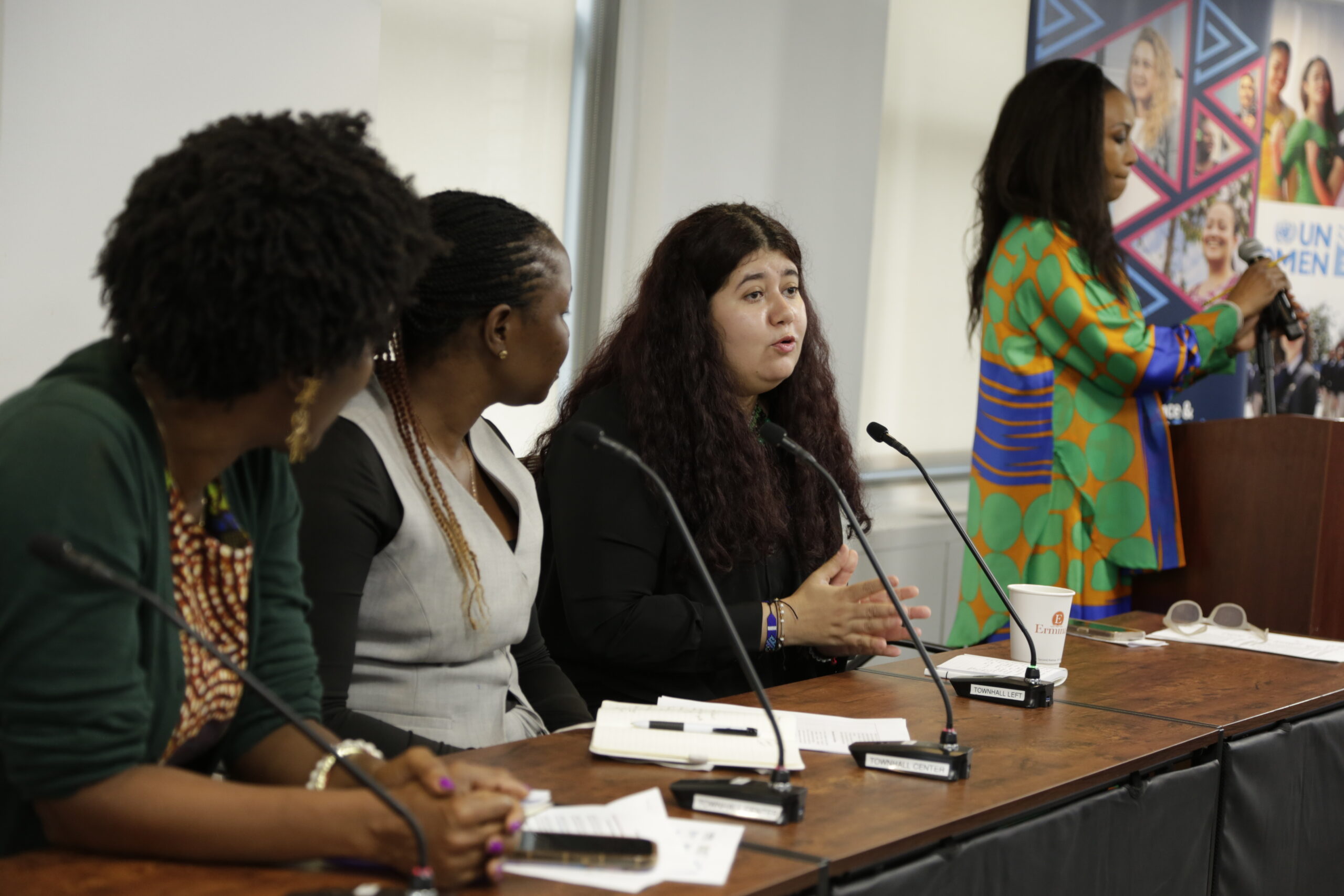
Bureaucracy shouldn’t stand in the way of impact. Xiomara Acevedo, a WPHF-supported partner from Colombia, called for more direct, flexible funding that recognizes the realities of local organizations and allows women to focus on driving change. Photo: UN Women/Mazlum Guzel
Alice Armanni Sequi, Chief, Pooled Fund Branch at OCHA, delivered remarks and said: “We really appreciate our partnership with WPHF and its ability to say which partners are not yet eligible to receive funding, asking us to work with them and strengthen their capacity so they can actually finance them directly. That’s a really important partnership for us, and we can only want more of that.”
Brian Williams, Chief, Financing for Peacebuilding for the United Nations Peacebuilding Fund, stressed the importance of core funding, saying: “Humanitarian peacebuilding and development funding works better if organizations have more core funding; it enables them to be more flexible. They can spend their time thinking about how to be more strategic and thinking about collaborating with partners, and not having to spend their time dealing with smaller donors with individual projects.”
On women-led civil society organizations and women peacebuilders, Fiona Asuke, Program Manager, Transformative Peace at Open Society Foundations, added: “Conflict transformation is a whole spectrum and it is a very fluid space. They need to have long-term, sustainable, and predictable funding for the groups. Beyond project support, being able to match you with more general support to be able to hold the spaces.”
Reflecting on the discussions, Paivi Kannisto, Chief of Peace and Security at UN Women, said: “WPHF is the only fund where civil society, Member States, and the United Nations are making decisions together. Private donors and foundations are heard and actively involved. It is a unique setting and that is what is needed in the situation of today’s conflicts […]. That is the exactly the situation needed for transformation.”
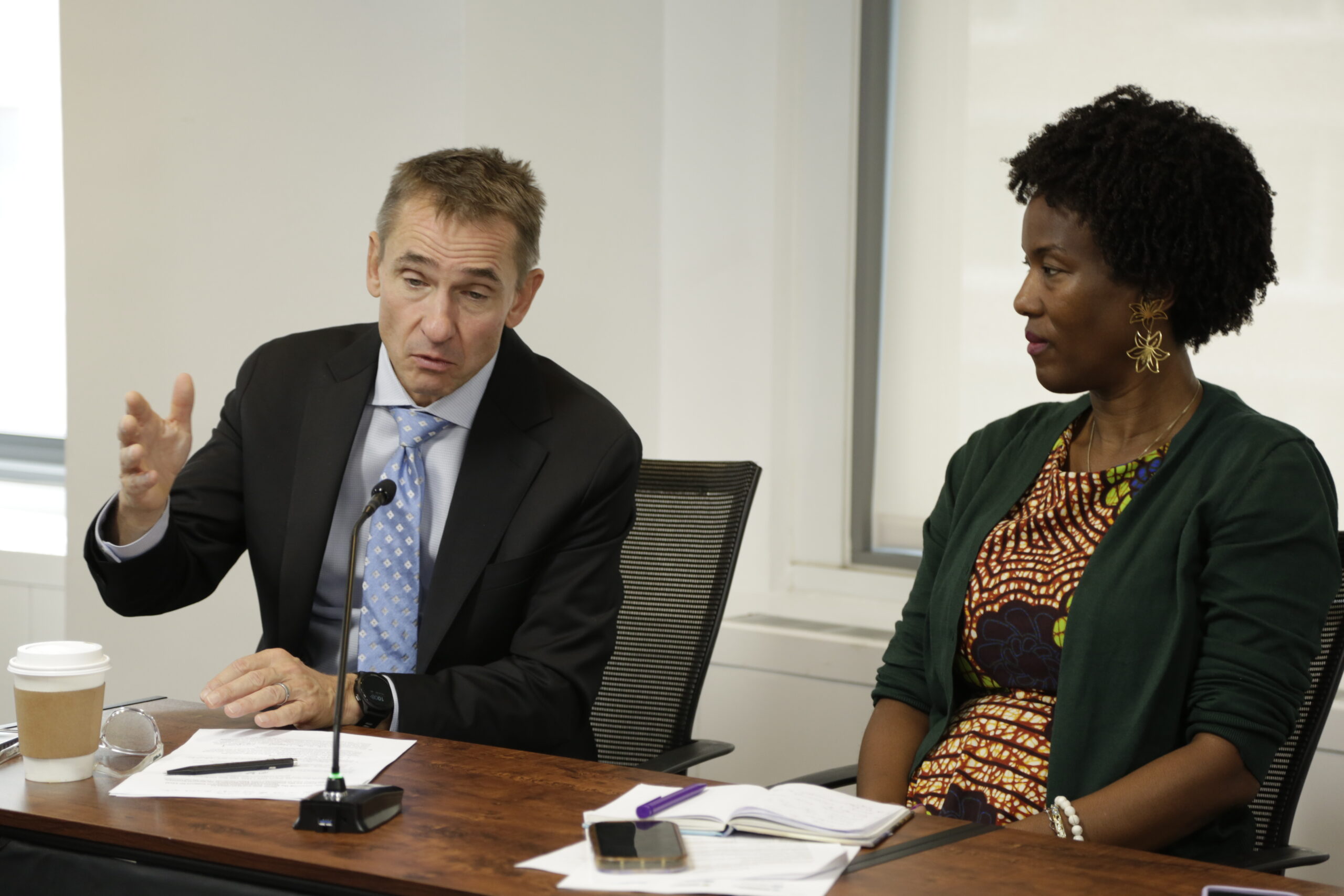
Brian Williams, Chief of Financing for Peacebuilding at the UN Peacebuilding Fund, emphasized how core funding allows grassroots organizations to focus less on managing individual projects and more on strategic planning, collaboration, and maximizing their impact. Photo: UN Women/Mazlum Guzel
Women Are Leading Across the Nexus — But Financing Has Not Kept Pace
Over the past decade, WPHF has shared evidence demonstrating the scale and impact of women-led organizations when financing reaches them directly:
- 66,900+ women and girls accessing urgent assistance in Ukraine
- 98,500+ survivors receiving legal, psychosocial, and protection services in Afghanistan
- 9,000+ women and girls accessing multi-sectoral services in Haiti
- 3,600+ people receiving protection and support in Syria
- 2,353 women in Liberia strengthening economic resilience and leadership
- 1,182 people in DRC improving financial inclusion and participation in peacebuilding
These results underscore the reality that women-led organizations are already delivering integrated solutions across the humanitarian‑development‑peace nexus — and that financing must evolve to match their leadership.
