10 Years of Women Building Peace Worldwide

Reclaiming Power in a Country Under Siege

Pascale Solages on Community Networks, Feminist Resistance, and Protecting Women in Haiti

In Haiti, people often say that life lasts just 24 hours — not because time is short, but because surviving beyond tomorrow is never guaranteed.

In a country where armed gangs control much of the territory, including large parts of the capital, Port-au-Prince, women and girls wake up each morning calculating their movements street by street. Can they walk to school? To work? To the market? Will their neighborhood be attacked tonight? Will their homes be burned down? Will they have to flee before dawn?

Pascale Solages knows this reality all too well.

Nowhere is safe for women and girl in Haiti. Their only fight right now is survival. They don’t even have the opportunity to fight for anything else.

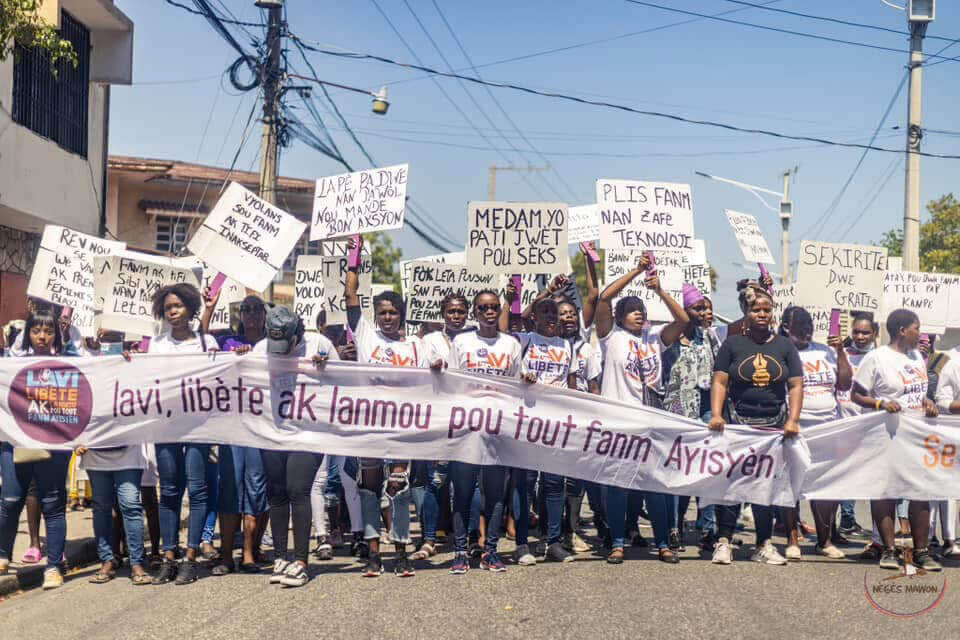
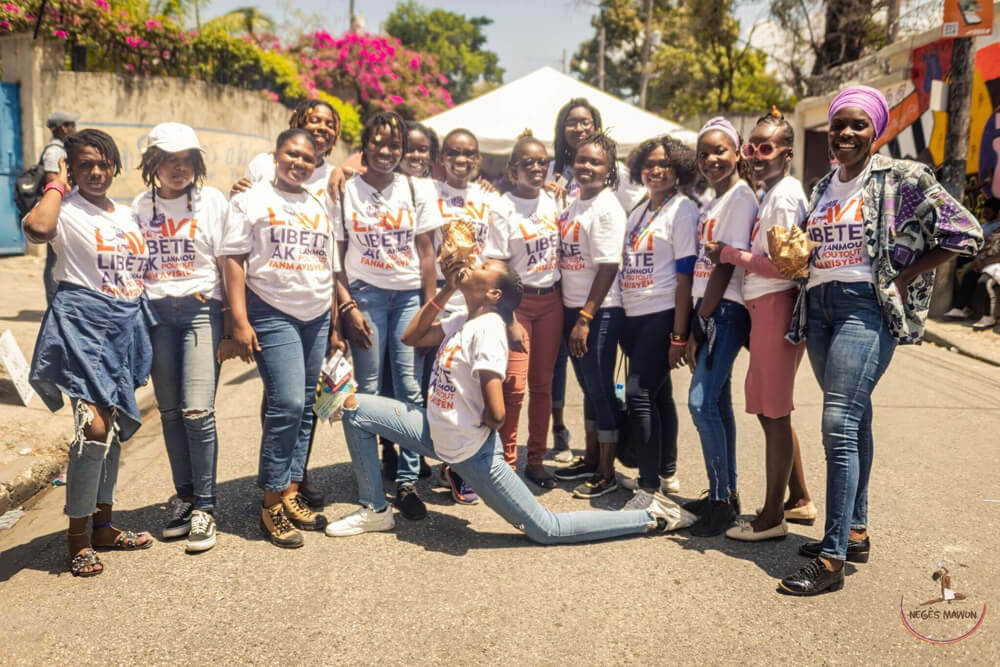
Born in Port-au-Prince, Pascale is the co-founder of Nègès Mawon, a feminist grassroots organization whose name reclaims a powerful chapter of Haitian history. In Creole, Mawon refers to the enslaved people who escaped plantations and resisted colonial rule, helping spark the revolution that made Haiti the world’s first Black republic. History often focuses on the rebel man, the Neg Mawon. Pascale chose to celebrate the rebel woman.

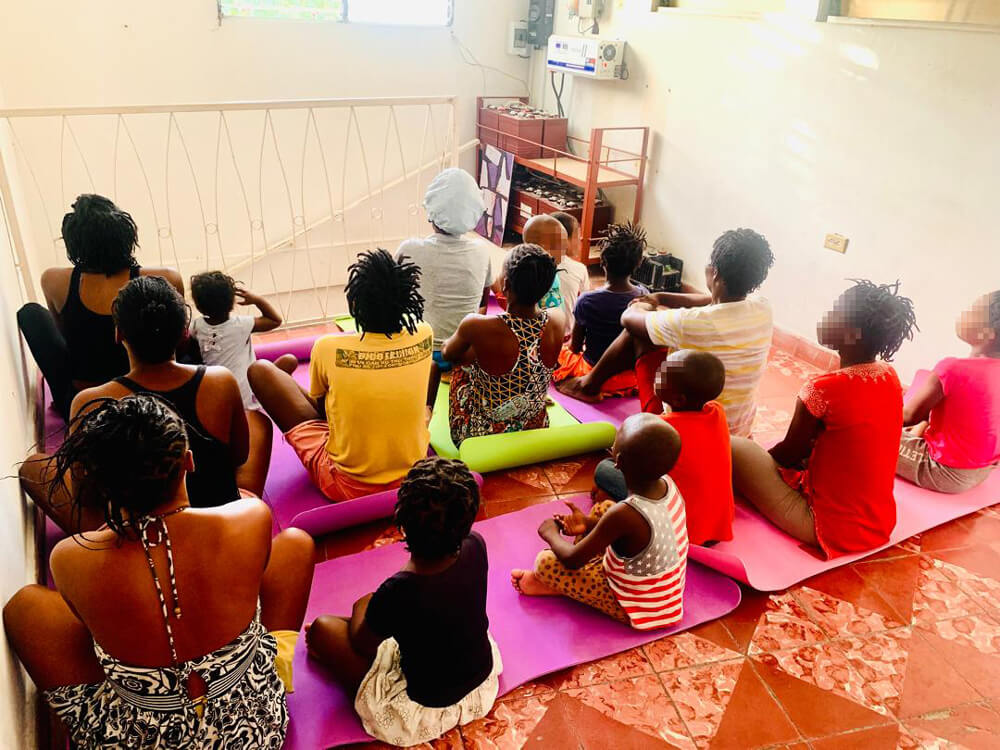
As violence escalated across the country and more women were forced from their homes, Nègès Mawon responded. In 2022, with support from the United Nations Women’s Peace and Humanitarian Fund (WPHF), they opened Maison Claire-Heureuse, a safe house for women and girls displaced by gang violence.

Since 2020, WPHF has supported 87 women’s rights and women-led organizations across Haiti, helping women and girls respond to growing humanitarian needs while strengthening their protection and recovery. Over 40% of these organizations received UN funding for the very first time through WPHF.

With this support, WPHF partners have ensured survivors of gang violence can access safe shelter and psychosocial care in clinics, helped women start small businesses to secure an income, and trained peer educators to spread knowledge on HIV prevention and family planning.

Named after Haiti’s first recorded nurse, Maison Claire-Heureuse offers much more than emergency shelter. Women and girls arrive with almost nothing, often after escaping attacks or repeated assaults, and receive medical care, psychological assistance, and legal support. They can stay as long as they need, and many also learn how to sew and paint textiles – skills that help them earn an income once they leave.
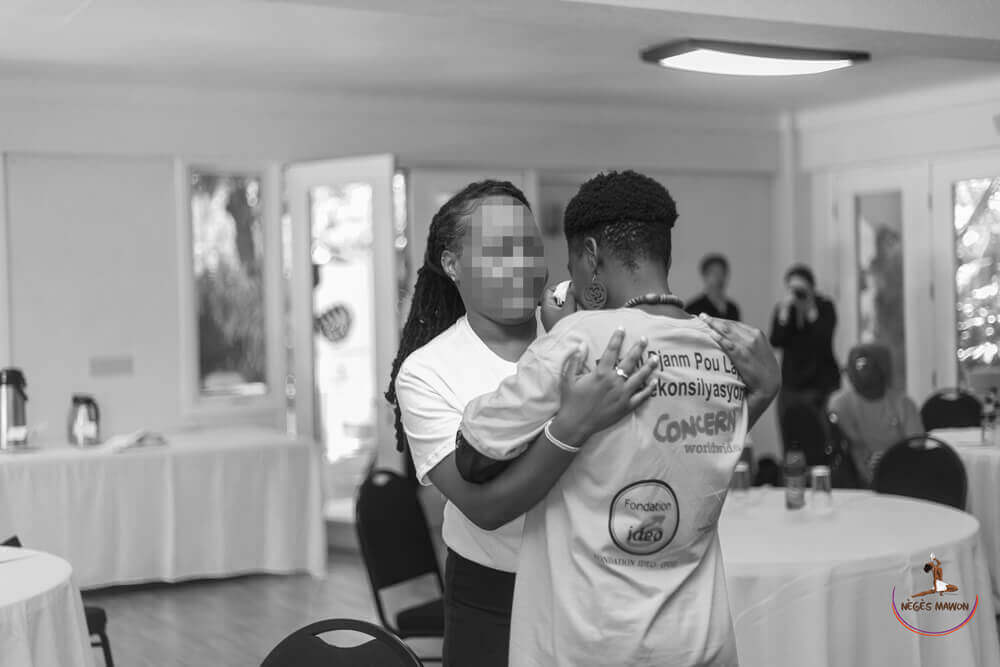
Women’s organizations like Nègès Mawon are often the only ones truly responding to the realities women face, which remain largely overlooked by the government. Pascale and her team work through trusted focal points inside gang-controlled neighborhoods who identify survivors and quietly refer them to the safe house. Many of these women had no idea that this kind of support was available to them.

Inside the walls of Maison Claire-Heureuse, up to 30 women at a time rebuild their lives. Many of them were raped in their neighborhoods, fled to displacement camps, and were assaulted again.

These stories must be told. Without names, without faces, the crisis in Haiti remains abstract.

One of those stories is her own. She grew up witnessing domestic violence, watching her father beat her mother. At eight years old, she was raped in her own home. She blocked the memory for years. When it resurfaced in her teenage years, she had no language to understand what had happened. She carried the trauma in silence and did not share her experience publicly until she was 33.

I felt like a hypocrite. I was telling Haitian women not to stay silent, and I didn’t have the courage to speak about my own experience.

For years, she had cultivated the image of a woman without weakness — a fierce feminist, a promising political candidate, a public voice unafraid of confrontation. That image protected her in Haiti’s violent political environment. But eventually, she realized that Haitian women deserved her truth. They deserved to know they were not alone.

If there is one word Pascale returns to again and again, it is power.

Growing up in a deeply patriarchal society, she saw how girls were taught, subtly and explicitly, to surrender their power. Today, she speaks about reclaiming it: the power of her voice, her body, her decisions; the power to change things for other women in Haiti.

She refuses to be a role model. She’s not interested in inspiring others. She’s just choosing resistance.

As a woman, and especially as a young Black Haitian woman, you have to fight every day to keep and use your power. The world will try to destroy it, but you have to fight back in every way you can.

Haiti’s history is a history of resistance, and Pascale sees herself as part of that lineage, walking in the footsteps of those who fought for freedom not only for themselves, but for the world. And in a country where life is measured in 24-hour intervals, she continues that fight, helping women reclaim their power.

Photo courtesy of Pascale Solages