At just 23 years old, Noor* has endured more loss than many face in a lifetime. The war took her husband. Displacement forced her from her home in Khan Younis, in southern Gaza. And for a time, she almost lost hope.
Today, she lives with her three young children in a tent in al-Mawasi, a crowded coastal strip designated a “safe zone,” yet overwhelmed by families fleeing the north, including Gaza City. The conditions are dire. Tents and toilets are scarce and often unaffordable. Many families struggle to secure even the most basic shelter.
Overnight, Noor became her children’s sole provider.
*To protect her safety and privacy, a pseudonym is used in this story.
I play the role of a mother and a father… Everything.
When her husband was killed, she could not sleep. She felt constantly on edge. She couldn’t focus on anything, and the smallest things made her irritable. “Every time I remember my husband, I feel like I can’t go on,” she once shared. She tried to stay strong for her children, to carry on alone, but the weight of trauma was starting to wear her down.
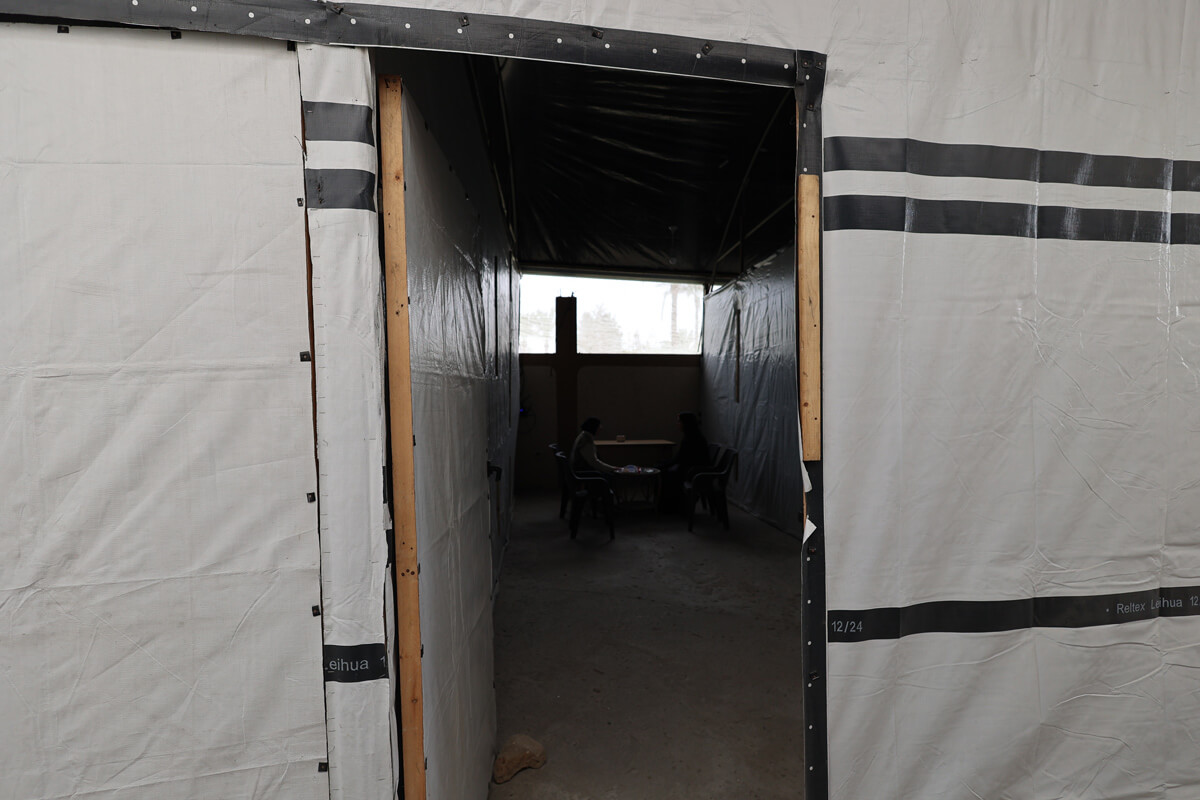
It was the women around her who first encouraged her to seek help. Through word of mouth, she started to join group support sessions led by a psychiatrist at the Center for Women’s Legal Research, Counseling and Protection (CWLRCP), a women’s rights civil society organization supported by the United Nations Women’s Peace and Humanitarian Fund (WPHF).
As the psychological toll of war and displacement deepens, CWLRCP has stepped up to meet the growing needs of women and girls, providing safe shelter, one-on-one psychosocial support, and activities like games and storytelling to help young girls release stress and process trauma.
We women talk to each other all the time. But sometimes, we need someone to support us.
Since 2020, WPHF has supported 58 women’s rights and women-led organizations across Gaza and the West Bank, helping them stay operational in the face of the escalating crisis. These groups are leading the humanitarian response on the ground, protecting women and girls, and working to sustain peace within their communities. 16% of these organizations received UN funding for the very first time through WPHF.
With this support, WPHF partners have delivered food and life-saving assistance under constant shelling, provided critical mental health care to women and girls, helped them launch small businesses to support their families, and set up legal clinics to assist widows who have lost their homes and livelihoods.