Explore more stories
10 Years of Women Building Peace Worldwide

Weaving Resistance in Wartime Ukraine

Maria Fleychuk on Cultural Heritage, Entrepreneurship, and Community Resilience Amid Conflict

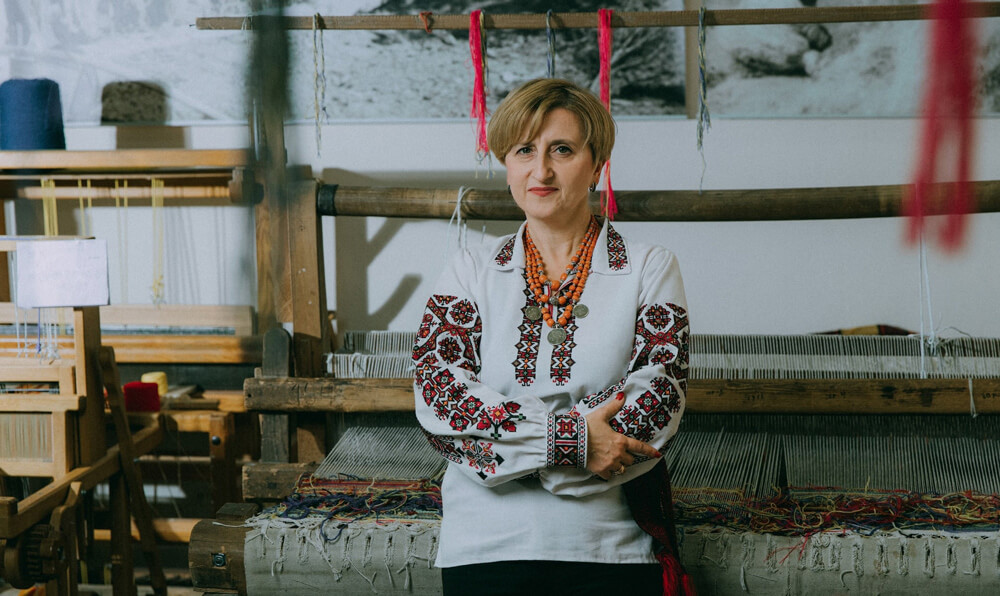
Hlyniany carpets are complex pieces. Each can require a full month of meticulous work by three artisans. (Photo: Nadia Berska)

In Hlyniany, a small town in western Ukraine, two women are bringing a centuries-old local craft back to life while supporting their community through wartime disruption.

As Russia’s full-scale invasion continues to reshape daily life across the country, Maria Fleychuk and her mother, Zenovia Shulha, are holding on to something many wars try to erase: culture. Inside their studio, they are weaving carpets and restoring a tradition that once brought international recognition to their town and nearly disappeared after decades of industrial decline and economic hardship.

Today, with support from the United Nations Women’s Peace and Humanitarian Fund (WPHF), the studio has become an economic backbone for women in their community. Most of the weavers are women who rely on this work for income at a time when opportunities have narrowed significantly. One member of the team is the wife of a Ukrainian soldier serving on the frontlines. For all of them, the studio is more than a workplace — it is a place of stability, solidarity, and hope during uncertain times.

Since 2022, WPHF has supported 208 women’s rights and women-led organizations across Ukraine, ensuring they have the resources they need to lead the humanitarian response on the ground, protect women and girls in war-torn communities, and drive peacebuilding and recovery efforts. 41% of these organizations received UN funding for the very first time through WPHF.

With this support, WPHF partners have launched small businesses across sectors ranging from food production to sewing, hairdressing, and handmade crafts; delivered life-saving assistance, including food, hygiene kits, and essential medication to displaced women and girls; and deployed mobile teams that provide legal aid and trauma-focused psychosocial support to vulnerable communities.
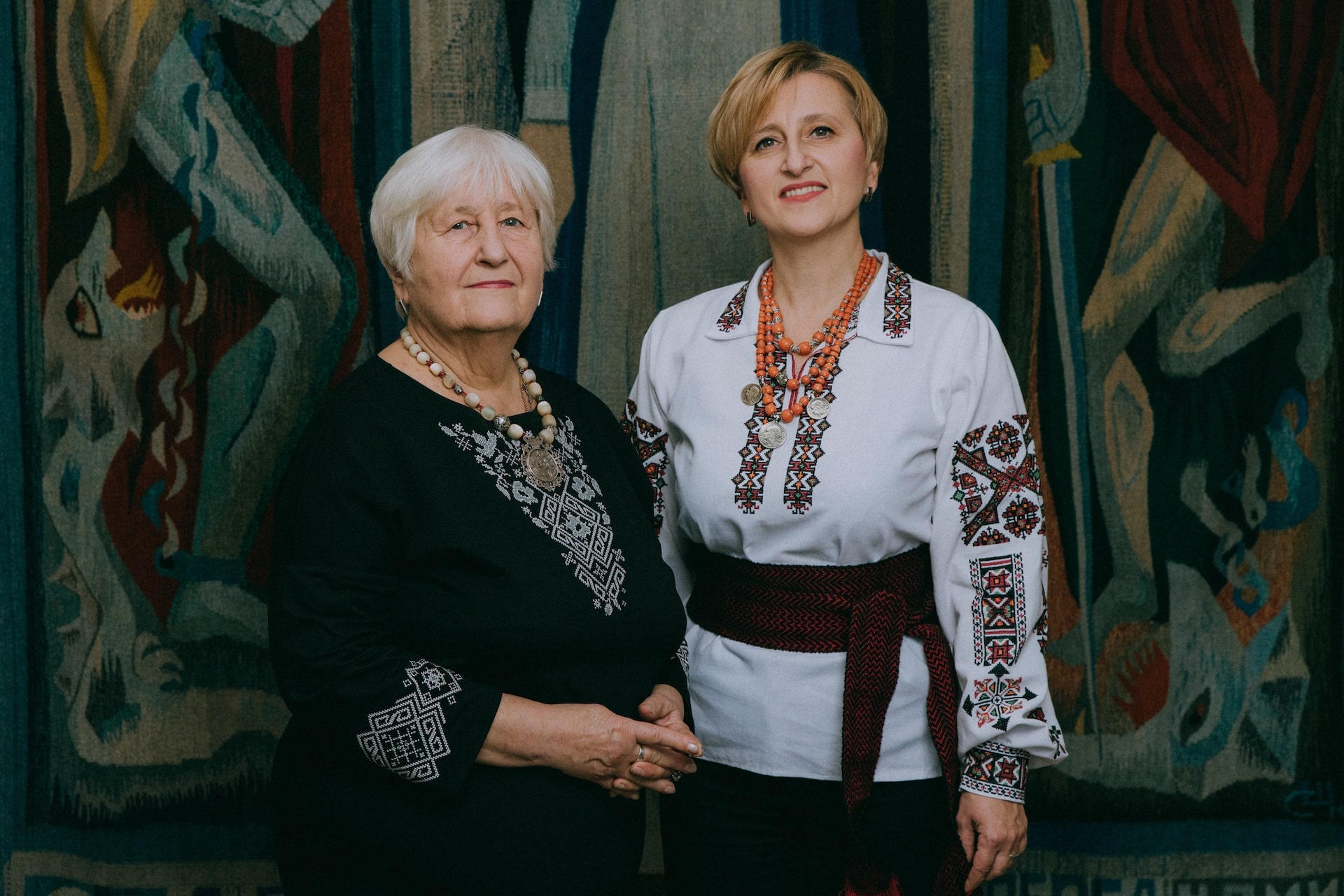
Zenovia Shulha (left) and Maria Fleychuk (right) in their carpet weaving studio. (Photo: Nadia Berska)

But their work doesn’t work at the studio door. Maria and her mother work closely with internally displaced children, large families, and households facing severe economic strain. They created a small street theater where children perform in costumes and with props handmade in the studio, staging performances in local communities and neighboring villages.

These performances offer much more than distraction — they create moments of belonging, creativity, and a sense of normalcy at a time when nothing feels normal.

These activities bring us immense moral strength. They remind us that community still exists.

With support from WPHF, they were able to expand this social mission, prioritizing employment for women from vulnerable groups and strengthening the studio’s role as a community hub. This funding also helped them publish a landmark book documenting the history and evolution of Hlyniany carpet weaving, a rare achievement at a time when funding for cultural initiatives is scarce.

This project gave us the chance to connect us with many businesses across Ukraine. We now collaborate, support one another, and keep moving forward together.

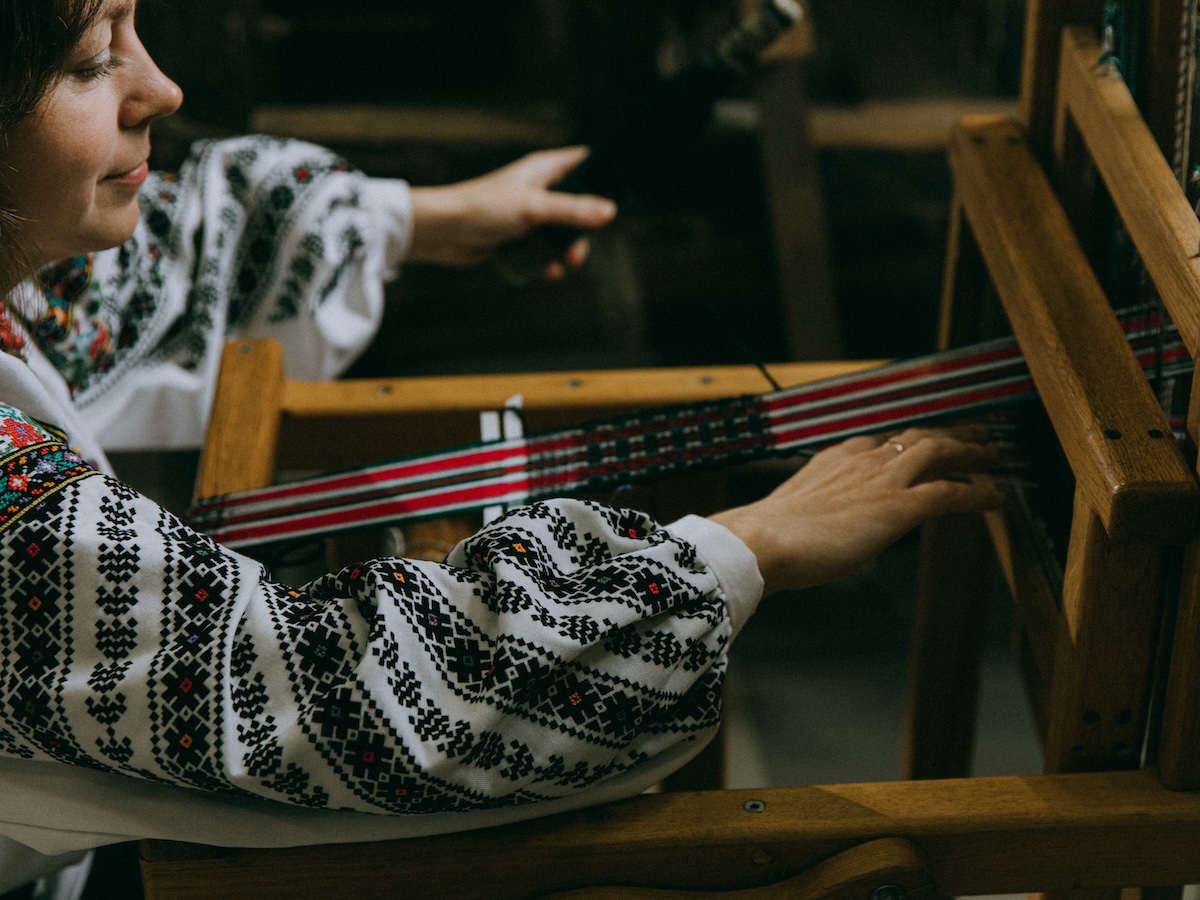
At the studio, weavers blend traditional motifs with contemporary vision. (Photo: Nadia Berska)

Maria grew up surrounded by the tapestries of her mother, a renowned textile artist and lifelong researcher of Hlyniany carpets. Although she pursued a career in economics, art was always part of her world. She never thought of herself as a natural artist, but she knew she wanted to build something tangible and use her skills to make a real difference.

In 2021, she founded the studio they now run together, transforming years of research and exhibitions into a sustainable business. Today, they produce limited-edition, handcrafted flat-woven carpets — no more than 10 pieces per design — blending traditional motifs with contemporary vision. Hlyniany textiles are now officially included in Ukraine’s list of intangible cultural heritage.

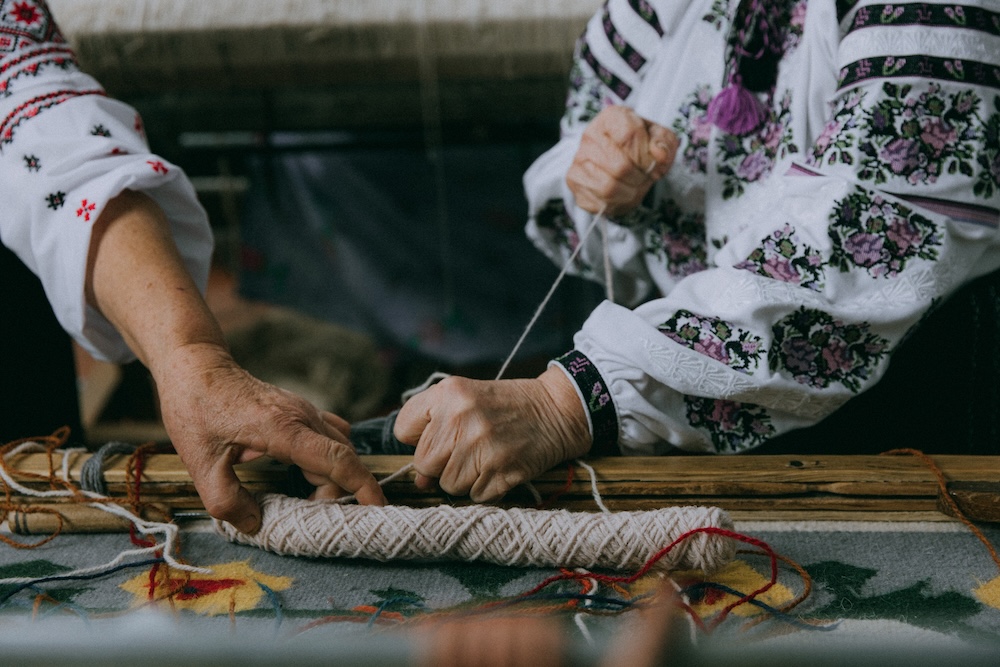
Each carpet takes time. A complex piece can require a full month of meticulous work by three artisans.

Every piece tells its own story.

Four years into Russia's full-scale war in Ukraine, the studio has become an economic backbone for women in Hlyniany. (Photo: Nadia Berska)

In their studio, Maria and her mother are proving that heritage can be entrepreneurial. That art can sustain entire communities. That creativity can become a form of resilience in the face of war and displacement.

We want people to understand that cultural heritage not only about history. It can generate real economic value for the community.

Even amid conflict, she is determined to bring Ukrainian textiles onto the global stage — not as relics of the past, but as contemporary works of art with profound cultural meaning and artistic significance. For her, this is part of rebuilding her country.

I want Ukraine to be recognized not only as a country impacted by war, but as a country with a very rich culture and strong communities. I hope our project can contribute to rebuilding both.

And she is already seeing the change. More and more young people in Hlyniany are stepping into the studio, curious about the looms, the patterns, and the history behind the carpets. In the middle of war, this curiosity feels like hope.

Maria and her mother are ready to teach them, to share what they know, and to ensure this unique tradition continues at a time when so much is being destroyed. They want the next generation not only to learn the craft, but to carry it forward, to reinterpret it, and to make it their own.
Maria Fleychuk in her studio in Hlyniany, western Ukraine. (Photo: Nadia Berska)