In a small village outside Hebron (Palestine), Mariam’s* world nearly collapsed with a single message. A close friend had secretly taken photos of her without a veil and was threatening to post them online unless she paid.
In Jiwaka province (Papua New Guinea), Lilly* dreads returning home from the market, fearing that her husband will become intoxicated again, beat her, and monopolize the only mobile phone in the house – further isolating her from online resources and the outside world.
Iryna*, a young woman from Kyiv (Ukraine) living with HIV and a survivor of sexual violence, found herself displaced without communication tools and cut off from essential support services when the full-scale war erupted.
Although these stories unfold in vastly different contexts, women’s safety and dignity are constantly negotiated and compromised – at home, in public, and on screens. The rise of digital violence against women and girls has blurred the boundaries between physical and virtual spaces, making it harder for women and girls to find safety. At the same time, digital tools are useful for effective survivor-centred responses to combat violence against women and girls.
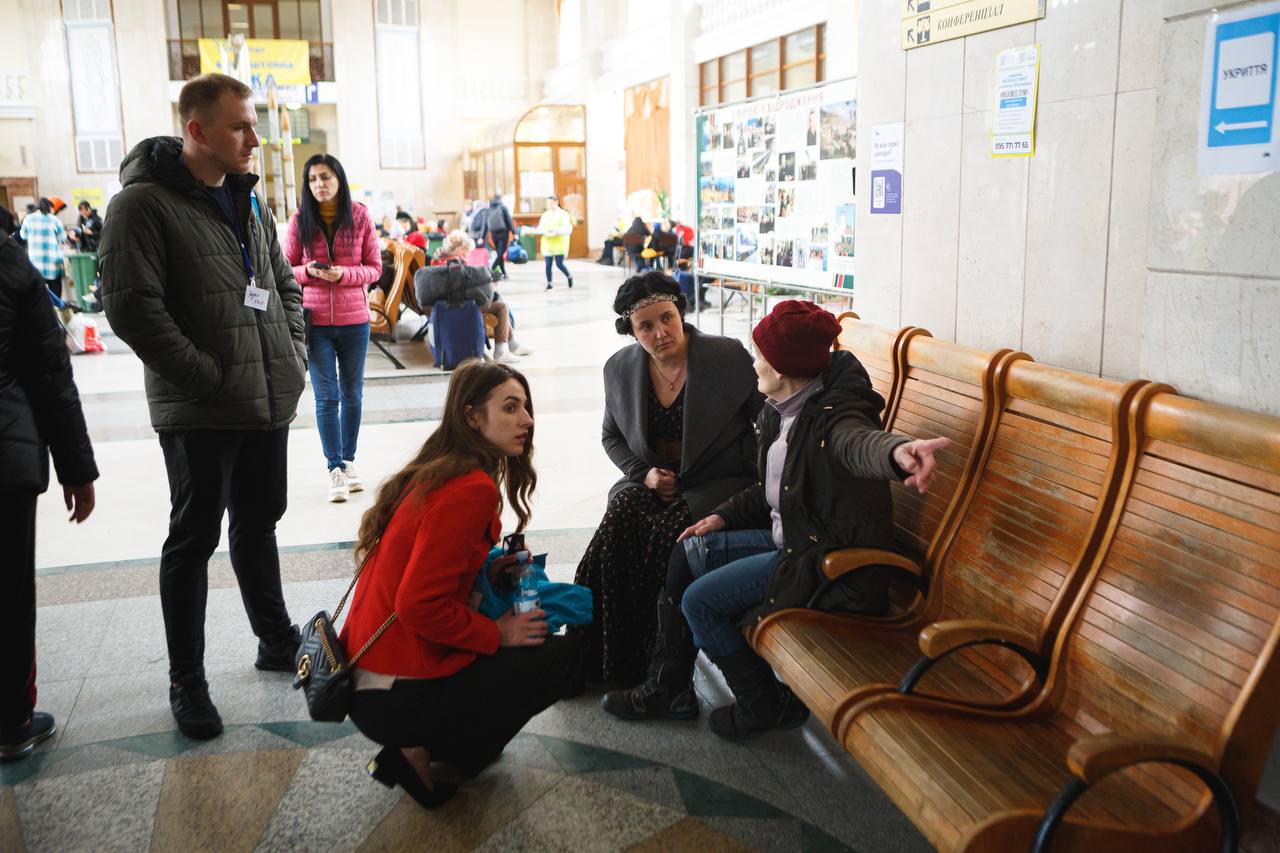
A support team, including a doctor, mental health coordinator and lawyer, speak with a displaced woman at the railway station in Uzhhorod, Ukraine. Photo: UNICEF/Hudak
Why women’s organizations are essential for reducing violence against women
One in three women will experience gender-based violence in her lifetime. Violence increases in conflict and crisis, and the risks only multiply online. Harassment, stolen images, deepfakes, and technology-enabled stalking strip women of safety and dignity and push them out of public life. They deny women and girls safety at home, at work, in schools, or on the streets.
In this landscape, local women’s rights and civil society organizations are often the first responders – building safe spaces, offering psychosocial support, and advocating for justice, both online and offline. Funding them is essential for ending violence against women and girls. Two complementary UN grant-making mechanisms partnering with UN Women – the United Nations Women’s Peace and Humanitarian Fund (WPHF) and the UN Trust Fund to End Violence against Women and Girls (UN Trust Fund) – are working together to sustain and scale this critical work, not only during emergencies, but long after immediate crises end.
From emergency response to long-term resilience in Ukraine
Between 2011 and 2014, the Ukrainian Foundation for Public Health (UFPH) received support from the UN Trust Fund to strengthen health and protection services for women living with HIV, internally displaced women and girls, survivors of violence, and those left without shelter. Through this project, UFPH trained social workers, health care providers, and law enforcement officers, thus creating a network of trained responders and survivor-centred services that would prove vital years later.
When the full-scale war began, through a timely partnership with WPHF and UN Women Ukraine, UFPH was able to build on this groundwork and rapidly activate the existing networks of responders and service providers to develop the Safe Women Hub – an online platform designed to reach women and girls cut off from support systems. Launched in April 2022, just two months after the outbreak of the Russia–Ukraine war, the Hub provides mental health support and referrals for displaced women and girls, survivors of sexual and gender-based violence, and survivors of human trafficking. Through the Safe Women Hub, Iryna* found a temporary and anonymous shelter, where she sought counseling service during the war.
With coordinated support from UN Women and the two Funds, Ukrainian women could sustain a powerful continuum of care, even during the war.
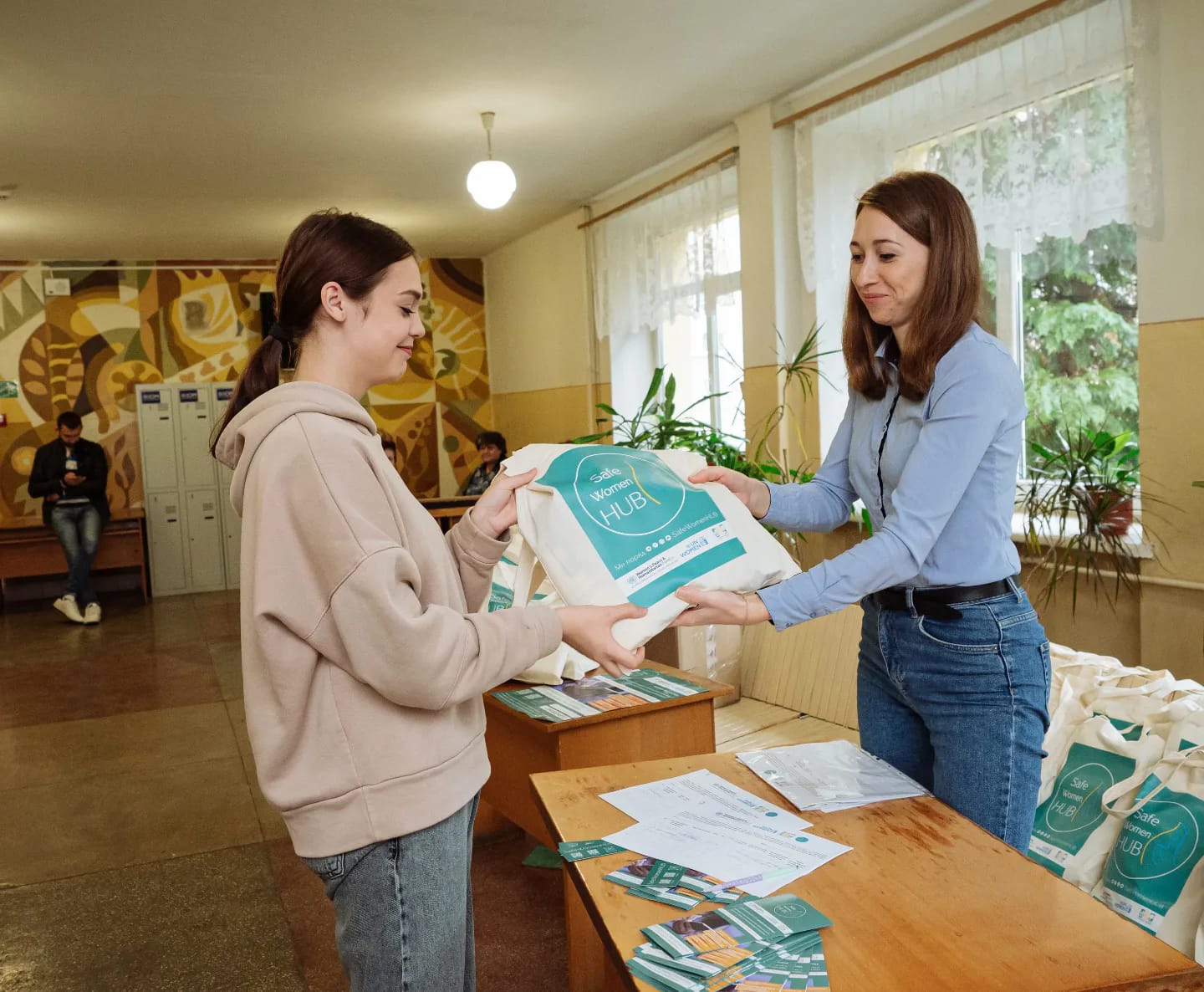
The Safe Women Hub supports the distribution of aid kits to internally displaced women and girls in Ukraine. Photo: Safe Women Hub
Keeping access to services alive and addressing digital violence against women in Palestine
Resilience is built on more than just funding – it requires the space and ability of individuals and communities to resist oppression and have ways of recovering from setbacks. It calls for donors to adapt to the changing contexts and nimble transformation that local women’s rights organizations are leading.
The UN Trust Fund’s investment in organizational capacity and resilience, complemented by WPHF’s broader focus on women’s participation, leadership, and agency are providing the kind of nimble support that women’s organizations need on the ground.
Rural Women’s Development Society (RWDS), a local organization in the Occupied Palestinian Territory (OPT), has built 58 women’s clubs in a span of over 40 years. These clubs are trusted spaces where women feel safe to gather, serving as crucial hubs to deliver services to women and girls who often face isolation or heightened risks of violence. For Mariam*, her local women’s club was the first point of contact when she discovered the non-consensual photo; it was also where she found a psycho-social therapist after RWDS helped her remove the photo from online spaces.
Over the past two years, WPHF and the UN Trust Fund have provided complementary support to the organization as it engaged women, youth, and bridged generational gaps in Palestine’s social movement. WPHF supported RWDS with rapid, flexible funding to empower women’s groups and youth to become early warning reporters of violence against women and girls. The UN Trust Fund is currently supporting RWDS to maintain specialist services for targeted communities (for example, widowed, single mothers, and women with disabilities who are survivors of violence), as accessing services has become harder in the present context of the conflict.
Adapting also to the newest frontier of violence against women and girls in digital spaces – with the WPHF and UN Trust Fund’s support – RWDS is transforming its approach to prevention and protection. The organization is working with community leaders, including men and religious figures, and the Cybercrime Unit to address cyberbullying and blackmail, framing digital safety as a matter of family and community well-being. For survivors like Mariam* in Hebron, this is no less than a lifeline.
“Right now, what women need most is protection”, said Rulla Sarras, Director of Funding and Development at RWDS. “They want to live in their homes safely, free from attacks. Even amid war, women are caring for their families and communities, and they need to feel secure – physically, mentally and emotionally – to continue keeping those around them safe.”
Making Papua New Guinea safer for women through community-led prevention and by tackling digital abuse
In Papua New Guinea, a country where two-thirds of women will experience violence in their lifetime, grassroots women’s organizations like Voice for Change (VfC) are transforming how communities prevent violence and support survivors, both off and online.
Funding from the UN Trust Fund enabled VfC to lead a province‑wide programme in Jiwaka Province that changed everyday realities for women and girls. It helped reduce public violence and street harassment against women and girls, made markets safer for women vendors like Lily*, supported the creation of local by‑laws and a provincial gender-based violence strategy, and catalyzed the formation of a Women Human Rights Defenders network that continues to work for change beyond the life of the project.
With WPHF’s flexible support, VfC is now building on the existing protection system it had curated and strengthening its network of Family Safety Committees, bringing together local organizations, government authorities, police, peace mediators, and justice officials. These committees have improved referral pathways for survivors, created new spaces for women human rights defenders to share experiences and strategize, and developed community prevention plans that tackle gender-based violence at its roots.
They are also addressing digital threats, including online harassment, and cyberstalking, helping women safely navigate online spaces while staying connected to critical support networks.
The UN Trust Fund’s early investment in VfC’s institutional system and multisectoral referral pathways built the foundation for long-term efforts to address violence against women and girls; while WPHF’s support has expanded its reach and networks to confront emerging challenges, including digital violence – reinforcing prevention with safety.
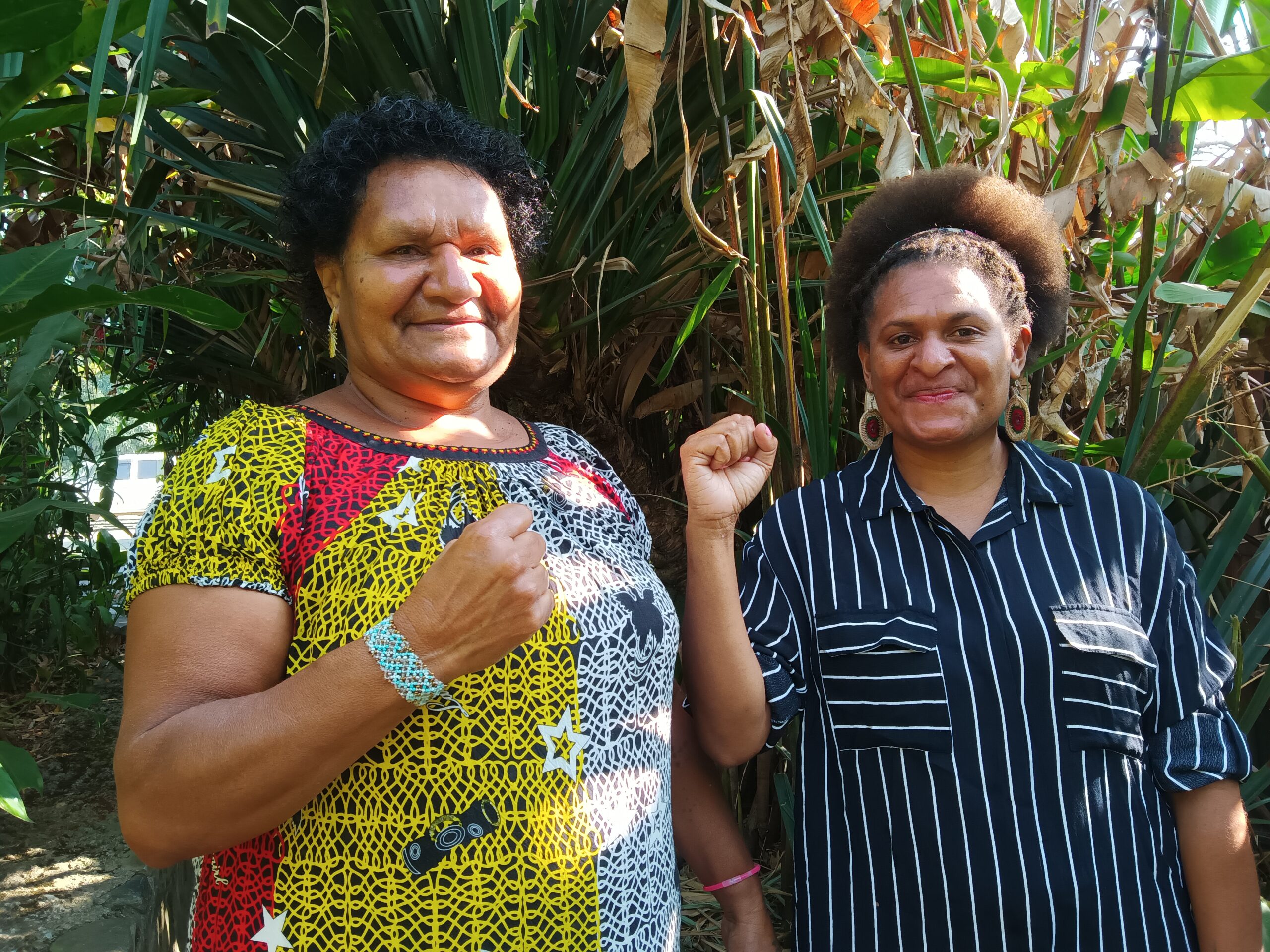
Two members of Voice for Change (VfC) take part in a capacity-strengthening workshop organized by WPHF in Jiwaka Province, Papua New Guinea. Photo: WPHF/Erica Stillo
A partnership that turns response into resilience
Ending violence against women and girls requires local leadership, sustained resources, and measures that reflect and match women’s real-life needs. In the wake of today’s unprecedented global funding crisis, the coordinated and dynamic partnership between WPHF, the UN Trust Fund, UN Women’s country offices and the wider UN system is fortifying and enhancing a more feminist funding landscape for frontline women’s groups in a way that no single mechanism could achieve alone.
By complementing the UN Trust Fund’s long-term investments and institutional strengthening with WPHF’s agility and proximity to crisis-affected communities — and anchoring both within UN Women’s global and country-level gender expertise — this partnership creates a unified, survivor-centred ecosystem built to last.
* Names changed to protect the individual’s identity.
