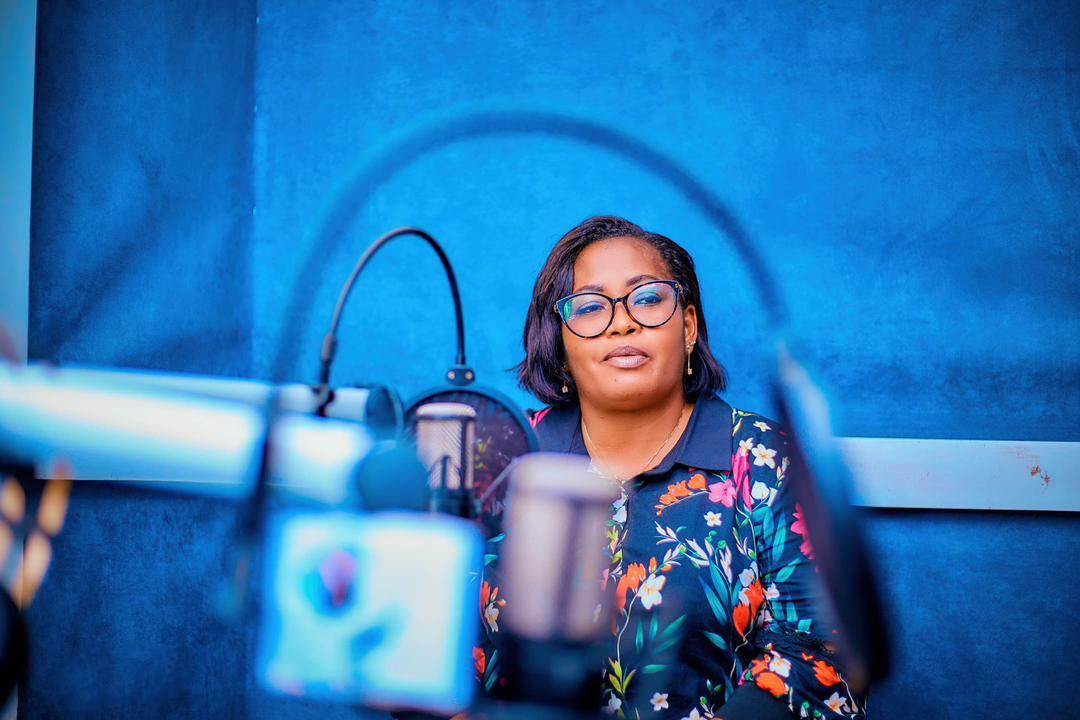
Bullets tearing through neighborhoods. Families fleeing with nothing but their children in their arms. Girls raped on the roads between cities and villages under the control of armed groups. Young people abandoning school to take up weapons.
For Nelly Mbangu, a civil society leader from the Democratic Republic of the Congo (DRC), these were never distant headlines. They were the stories and sounds of her childhood.
Born and raised in North Kivu, a province in eastern DRC ravaged by decades of conflict and instability, she grew up surrounded gunfire, displacement, and constant fear. And unlike childhood itself, the war never ended. It followed her into adulthood, into motherhood, and into every chapter of her activism.
“I’ve lived through almost every war in my country, and I have memories that never leave me. I know too well the pain and loss that conflict brings to families and communities. What I want is to see my country, my neighbors, my family, live in safety, dignity, and peace.”
Like many Congolese women, Nelly became a women’s rights activist long before she had the words to name what she was doing. She has spent her life on the frontlines of peacebuilding, protection, and advocacy, driven by her determination to see her children grow up in a country no longer defined by war.
Today, Nelly leads Sauti ya Mama Mukongomani (The Voice of Congolese Women), a grassroots organization based in North Kivu that works directly with communities affected by conflict. She also supports peacebuilding efforts through the Réseau des Organisations Féminines, a network of women’s organizations engaged in conflict mediation and local responses to sexual and gender-based violence.
“Every woman I reach, every voice I help amplify, strengthens the peace around us. Change does not only happen in peace tables and meeting rooms — it happens on the ground, where women are shaping the future of our communities every day.”
With support from the Rapid Response Window (RRW) of the United Nations Women’s Peace and Humanitarian Fund (WPHF), Nelly and her organization are strengthening the role of community women peacebuilders and mediators across North Kivu and neighboring regions, creating safe spaces where they can organize, coordinate, and develop shared agendas rooted in lived realities, while demanding their inclusion in peace processes.
As a result, women who once hesitated to speak up are now trained conflict mediators, negotiating with local authorities, supporting survivors of violence, and advocating for protection and security in their communities. Nelly recalls internally displaced women who, after participating in WPHF-supported workshops, began leading dialogues in their communities and identifying others to follow the same path.
“In DRC and across the world, women are the ones living through these wars. It’s our right to lead the efforts to end them. Only us women know the horrors we face every day and the urgent solutions we need. We must be where decisions are made, where questions need to be asked, to make peace a reality.”
View this post on Instagram
For Nelly, the crisis in eastern DRC is not something she reads about — it is the reality she has lived through and continues to navigate every day. For more than 30 years, her region has been shaped by conflict, but in 2022 the violence surged with a new intensity. What began in remote rural areas spread rapidly toward Goma, the capital of North Kivu, pushing entire communities, including Nelly’s own, deeper into crisis. Armed groups expanded their reach, atrocities multiplied, and rape became a systematic weapon of war.
As a woman and a mother, she has felt the consequences most sharply. Insecurity has destroyed local economies, making it impossible to farm, trade, or even move from one place to another. She has seen children pulled out of school because families can no longer afford fees or guarantee their safety, and she has witnessed too many young people drawn into armed groups like the M23.
Amid escalating violence and the collapse of everyday life, protection has become the most urgent need for women and girls across North Kivu.
“Decades have passed, but the yearn for peace is still everywhere in DRC. Every time I visit a school, the message I hear from our children is the same: they want peace, and they want it now. There is nothing else on their mind because their future can only exist if conflict and violence come to an end.”
Yet even amid violence and displacement, women are the first to respond. When conflict erupts, they stay, often at great personal risk, providing support when systems collapse and holding entire communities together. They ensure services for displaced families, mediate local tensions, keep children learning, and provide life-saving care to survivors.
Having lived at the forefront of DRC’s escalating crisis for decades, Nelly has seen this truth again and again: to know what’s happening on the ground and respond effectively, one must talk to women.
“We women’s organizations are here as key actors. We are the ones who initiate action. We deliver responses adapted to local realities because we know the needs on the ground. And all of this happens before coordinated humanitarian aid or other actors arrive.”
For Nelly, peace is not only about ending violence — it is about continuity. It is about ensuring that the leadership Congolese women have shown for decades does not end with them. And that means preparing girls to step into that legacy: to believe in their abilities, strengthen their skills, and lead in solidarity with other young women across the DRC and the continent.
